
RESEARCH SERVICES
Question-led research collaboration
Study assessment & collaborationArc-well cohort design, wellDR-seq same-cell studies, and scoped bioinformatics and interpretation.
PRODUCT DEVELOPMENT
Developing reagents, automation modules and data tools around research needs, with more reproducible workflows and traceable results.
ONE PLATFORM, DIFFERENT STAGES
A development roadmap linking sample preparation, same-cell assays and data interpretation with research collaboration, experimental tools and software.
RESEARCH SERVICES
Arc-well cohort design, wellDR-seq same-cell studies, and scoped bioinformatics and interpretation.
CORE KITS
Develop reproducible preparation, nanowell, library and QC reagent workflows. Performance and availability require formal release.
ARCELL One
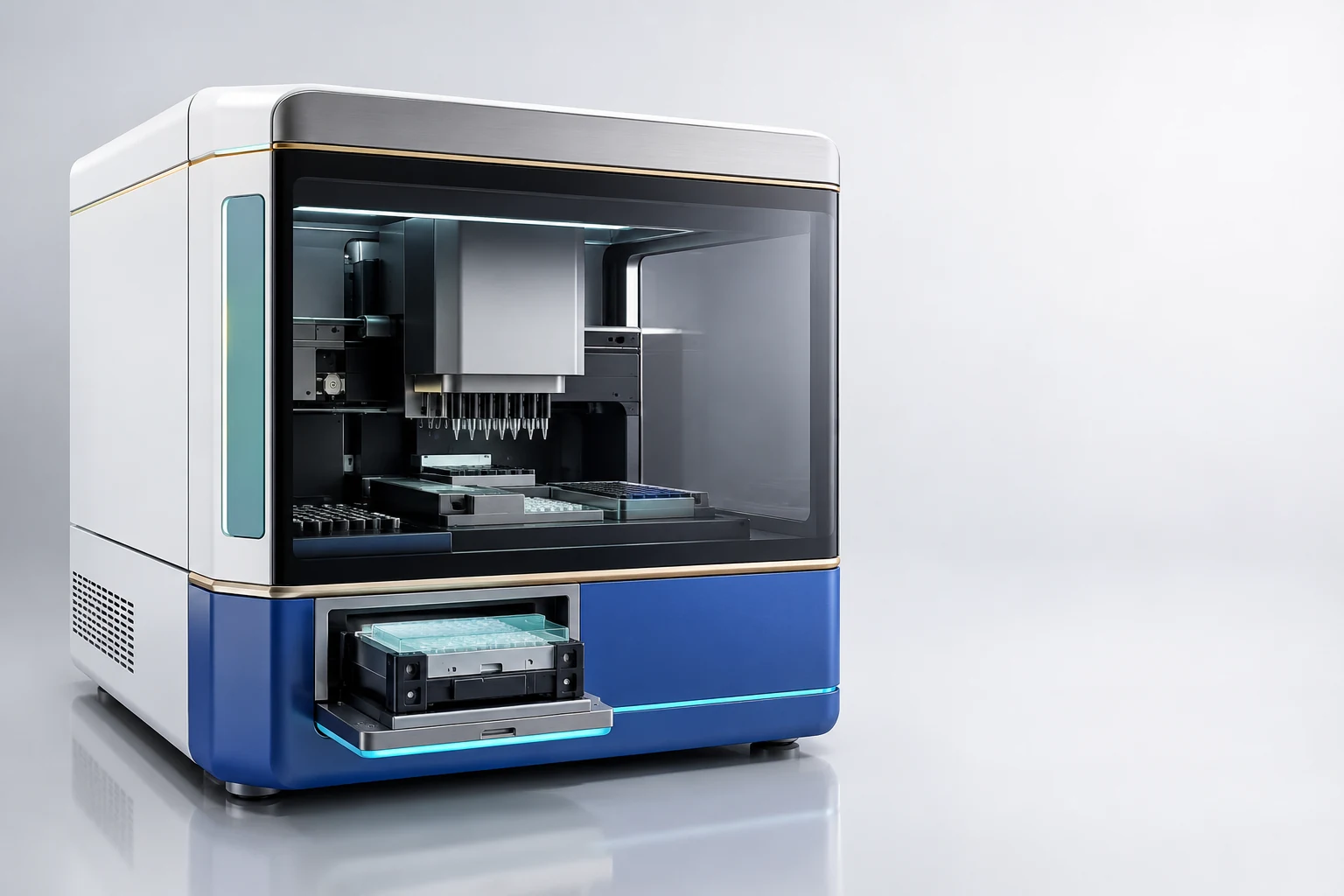
Explore dispensing, image-based selection, traceability and library-assistance modules; the concept image is not a launched device.
INSIGHT / ATLAS
Organize QC, CNA, clonal relationships, DNA–RNA integration and cohort comparisons into project-validated analytical modules.
ARCELL One · CONCEPT SYSTEM
Sample preparation, single-cell processing and quality assessment.
Nanowell dispensing, imaging, selection and tracking.
DNA or DNA+RNA library preparation and in-process QC.
CNA, clonal structure, paired analysis and result traceability.
EXPLORATORY DIRECTIONS
Explore DNA–ATAC, spatial clone and functional-model integration to support the next stage of method and application validation.
R&D direction: connect genomic clones to chromatin accessibility, subject to method validation, peer review and external assessment.
R&DCollaboration direction: associate DNA-defined candidate clones with spatial data and validate locations and neighborhoods in situ.
Exploratory collaborationStudy-design direction: connect organoids, genetic perturbation and appropriate drug experiments to test candidate clonal mechanisms.
Study extensionLET’S BUILD YOUR STUDY
For research platforms, pathology centers and engineering collaborators: discuss samples, workflows, modules and validation plans.