
SCIENTIFIC EVIDENCE
Scientific questions
Start with published work. Distinguish research observations, application extensions and questions still to be tested.
CELL 2023 · ORIGINAL RESEARCH
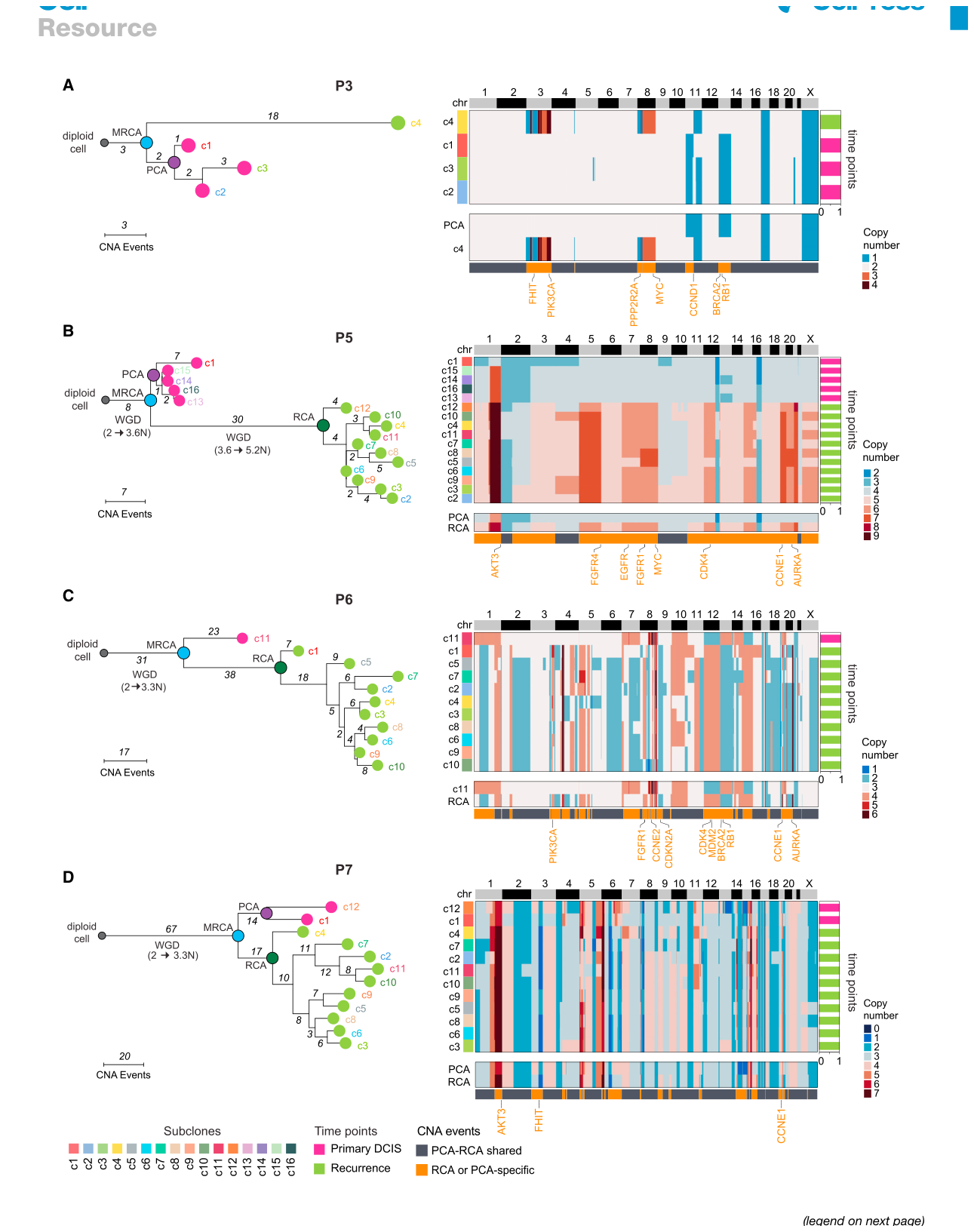
Investigating persistent subclones in archival tissue.
The study applies single-cell DNA analysis to archived FFPE material and paired primary–recurrence specimens to investigate persistent subclones and evolutionary patterns.
Study scope: 27 FFPE specimens and 40,330 single cells; archival storage of 3–31 years. The paired progression subset should be distinguished from the overall specimen set.
Archival single cell genome sequencing reveals persistent subclones over years to decades of DCIS progression
DOI: 10.1016/j.cell.2023.07.024 ↗Supports: FFPE feasibility, CNA-defined subclones and evolutionary modeling. Does not establish universal cancer compatibility, individual recurrence prediction or guaranteed sample success.
 Open figure ↗
CELL 2025 · ORIGINAL RESEARCH
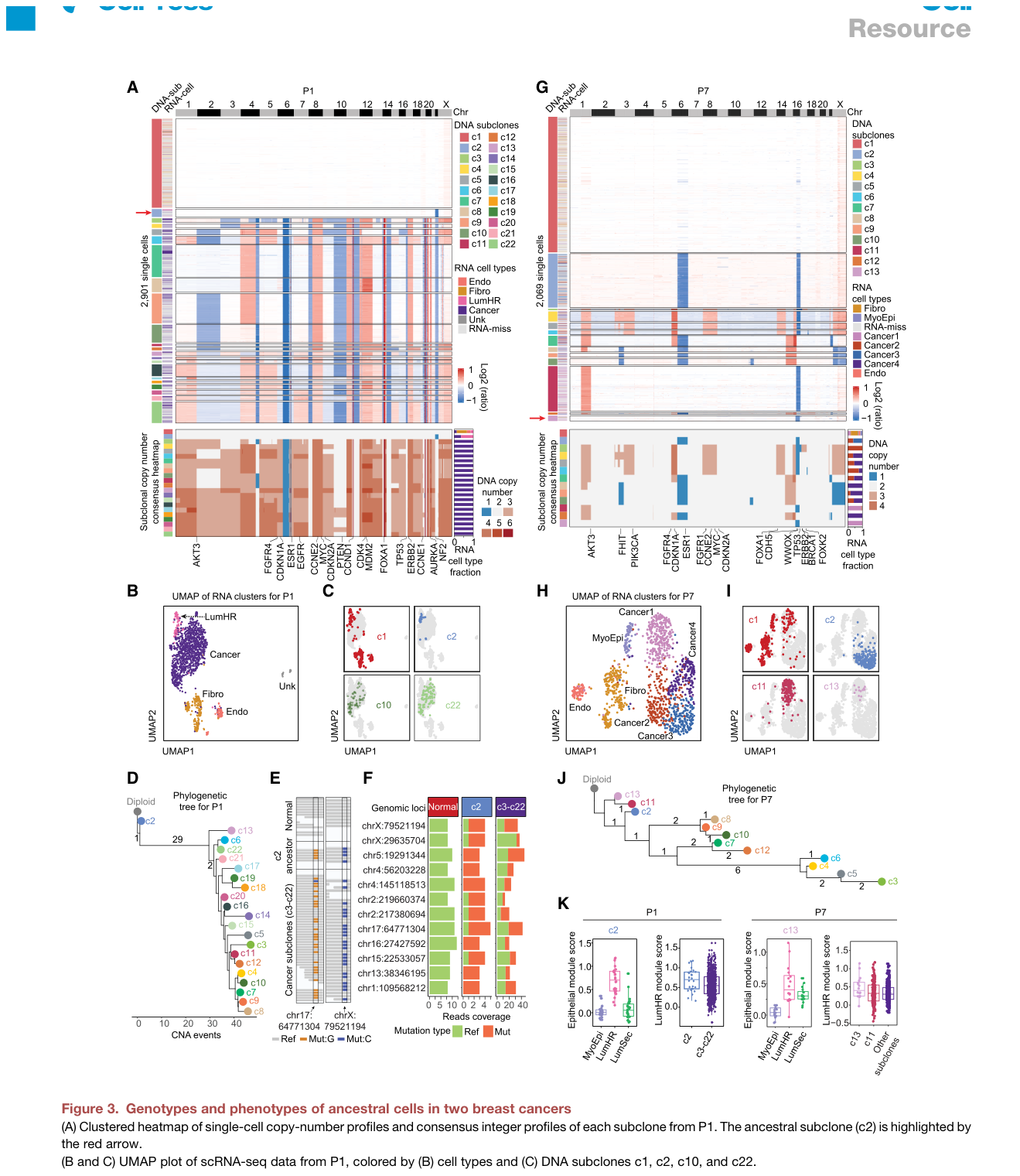
Comparing genomes and transcriptional states in the same cell.
The study retains cell-level DNA–RNA pairing in ER+ breast tumors to examine subclones, lineage-associated signals and gene-dosage effects.
Study scope: 12 ER+ breast tumors and 33,646 cells. The approximately 56% near-linear CNA–expression association is specific to the study analysis.
Coalescing single-cell genomes and transcriptomes to decode breast cancer progression
DOI: 10.1016/j.cell.2025.08.012 ↗Supports: same-cell measurement, clone–phenotype associations and mechanistic candidate selection. Does not establish causality, arbitrary FFPE compatibility or comprehensive variant detection.
 Open figure ↗
 Open figure ↗
INTERPRETING EVOLUTION
From complex heatmaps
to interpretable evolutionary models.
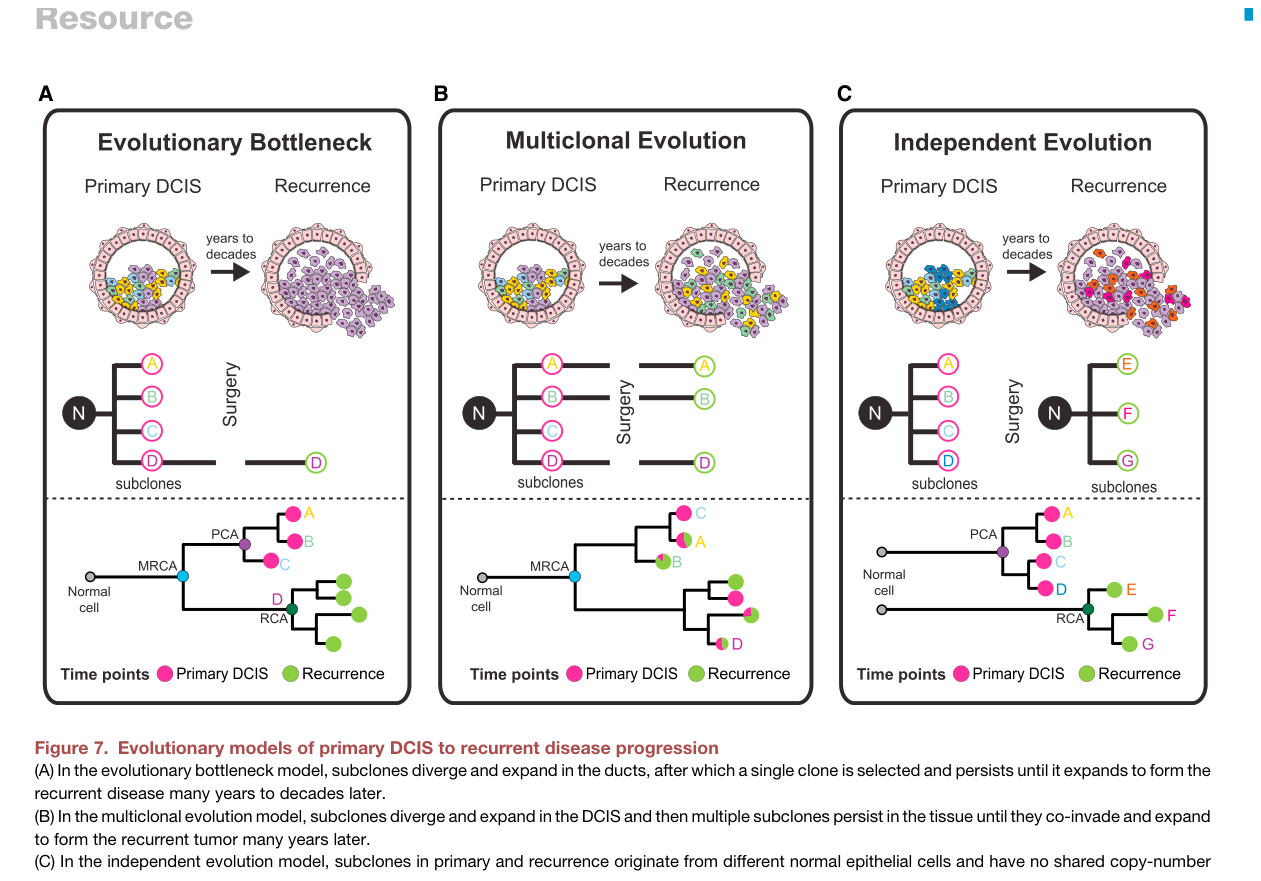
The study summarizes primary DCIS-to-recurrence relationships as evolutionary bottlenecks, multiclonal progression and independent evolution. These are data-interpretation frameworks, not specimen-independent diagnostic categories.
In your cohort, investigate relationships with sampling region, follow-up and treatment background, while stating uncertainty in sampling and reconstruction.
LET’S BUILD YOUR STUDY
Start with a question worth answering.
Bring your sample type, research question and existing data. Let’s find the right starting point.